
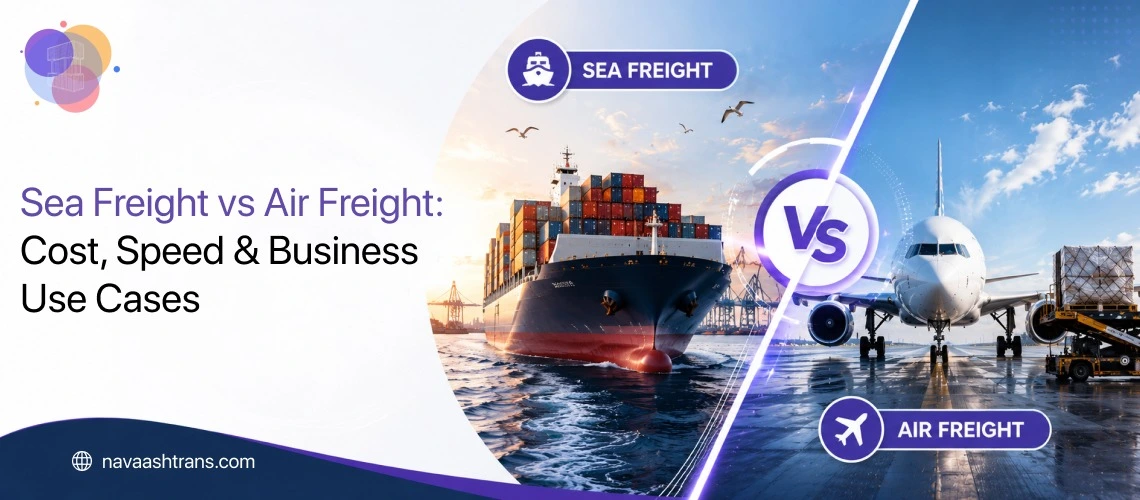
In global trade, choosing the right shipping method can directly affect your business costs, delivery timelines, customer satisfaction, and overall supply chain efficiency. When companies plan international shipments, one common question comes up: sea freight vs air freight, which option is better?
The answer depends on several factors such as cargo type, urgency, shipment size, budget, and destination country. Both transportation modes play an important role in international cargo transport, but each has its own advantages and limitations.
In this detailed guide, we will compare sea freight and air freight based on cost, speed, business applications, reliability, and logistics planning. Whether you are an exporter, importer, manufacturer, or eCommerce business, this article will help you make smarter shipping decisions.
Understanding Sea Freight and Air Freight
What is Sea Freight?
Sea freight refers to transporting goods through cargo ships across international waters. It is one of the most widely used methods for global trade because it is ideal for heavy, bulk, and large-volume shipments.
Businesses commonly use sea cargo shipping for:
- Industrial machinery
- Raw materials
- Automotive parts
- Chemicals
- Consumer goods
- Furniture
- Construction equipment
Sea freight usually operates through Full Container Load (FCL) or Less than Container Load (LCL) shipping models.
What is Air Freight?
Air freight involves transporting goods through cargo aircraft. It is the fastest method of international freight shipping and is commonly used for urgent, lightweight, and high-value cargo.
Businesses prefer air cargo services for:
- Medical supplies
- Electronics
- Fashion products
- Perishable goods
- Emergency shipments
- High-value items
Air freight is highly suitable when delivery speed matters more than transportation cost.
Sea Freight vs Air Freight: Key Comparison
1. Cost Comparison
Sea Freight: More Cost-Effective for Bulk Cargo
When businesses compare sea freight vs air freight, cost is often the biggest deciding factor. Sea freight is significantly cheaper for transporting large shipments over long distances.
Shipping by sea allows businesses to move thousands of kilograms in one container at a lower cost per unit. This makes it ideal for companies focused on cost effective cargo transport.
For example:
- A furniture exporter shipping 15 tons of goods from India to Europe will usually save a substantial amount through sea freight.
- Large industrial shipments are almost always moved through ocean transport because air freight costs become extremely high.
Sea freight is especially useful for companies managing regular imports and exports through long-term global logistics solutions.
Air Freight: Higher Cost but Faster Delivery
Air freight is more expensive because airlines charge based on weight and volumetric dimensions. Fuel costs, airport handling, and security procedures also increase overall shipping expenses.
However, businesses still choose air cargo services when:
- Shipment delays can cause major financial loss
- Products are time-sensitive
- Goods have high market value
- Urgent customer demand exists
For instance, electronic manufacturers often ship newly launched products by air to reach markets quickly.
2. Speed Comparison
Air Freight: Fastest Shipping Method
In terms of delivery speed, air freight is the clear winner.
International air cargo can often reach destinations within 1 to 7 days depending on customs procedures and airline schedules. This is especially important for industries with tight supply chain timelines.
Air freight works well for:
- Emergency inventory replenishment
- Pharmaceutical products
- Seasonal fashion products
- Urgent spare parts
A delayed shipment in some industries can stop manufacturing operations completely. In such situations, fast international freight shipping becomes essential.
Sea Freight: Slower but Stable
Sea freight usually takes several weeks depending on the shipping route and port congestion.
Examples:
- India to UAE: 7-15 days
- India to Europe: 25-40 days
- India to USA: 30-50 days
While slower, sea cargo shipping offers reliable movement for businesses planning shipments in advance.
Companies with predictable inventory cycles often prefer sea freight because the savings outweigh the longer transit time.
Business Use Cases: When to Choose Sea Freight or Air Freight
Best Use Cases for Sea Freight
Heavy and Oversized Cargo
Sea freight is ideal for transporting:
- Industrial equipment
- Heavy machinery
- Construction materials
- Break bulk cargo
Businesses handling oversized shipments often combine sea transport with specialized solutions like Break Bulk Cargo Services for safe handling.
Bulk Import and Export Operations
Companies importing large quantities of products regularly benefit from lower shipping costs through ocean freight.
Industries commonly using sea freight include:
- Manufacturing
- Retail
- Automotive
- Agriculture
- Chemical industries
Non-Urgent Shipments
If delivery speed is not critical, sea freight offers better profitability.
Many exporters working with Import Export Logistics Services use sea freight to maintain lower operational costs.
E-Commerce Restocking
Online sellers who plan their inventory cycles well often use sea freight to replenish stock. A clothing brand in India sourcing from Vietnam, or a home goods seller importing from China, will typically ship by sea as long as they maintain adequate lead time.
Best Use Cases for Air Freight
Time-Sensitive Shipments
Air freight is best when businesses need fast product delivery.
Examples include:
- Medical emergencies
- Product launches
- Urgent replacement parts
- Fresh or perishable products
A kilogram of mangoes losing quality in a slow sea shipment represents a total loss, not a delayed delivery.
High-Value Goods
Luxury items, electronics, and branded products often move through air cargo because faster delivery reduces security risks.
Small and Lightweight Cargo
For smaller shipments, air freight may sometimes become practical despite higher rates because it reduces storage and inventory holding costs.
Sea Freight vs Air Freight: Customs Clearance Process
One important factor businesses often overlook is the customs clearance process.
Both sea and air shipments require documentation and regulatory approvals before cargo can enter or leave a country.
However, air freight customs procedures are generally faster because airports handle smaller shipment volumes compared to seaports.
Sea freight may involve:
- Port inspections
- Container examinations
- Demurrage risks
- Longer clearance timelines
Import export documentation mistakes are one of the most common reasons for delays, demurrage charges, and penalties. Many businesses face losses because of Import Export Documentation Mistakes such as:
- Incorrect HS codes
- Missing invoices
- Wrong cargo declarations
- Incomplete packing lists
Working with experienced freight forwarding services providers helps businesses avoid these issues and maintain smoother cargo movement.
Environmental Impact: Which is More Sustainable?
Sustainability is becoming increasingly important in global logistics.
Sea Freight Has Lower Carbon Emissions
Compared to air transport, sea freight generates significantly lower carbon emissions per ton of cargo transported.
Businesses focused on sustainable logistics often prefer ocean shipping for large-volume goods.
Air Freight Produces Higher Emissions
Aircraft consume much more fuel, making air cargo less environmentally friendly.
Companies balancing speed and sustainability often use mixed global logistics solutions where urgent goods move by air while bulk inventory moves by sea.
Need reliable sea freight or air cargo support for your business?
Connect with Navaashtrans today for customized international logistics and freight forwarding solutions across India.
Reliability and Risk Factors
Sea Freight Risks
Although economical, sea freight can face delays due to:
- Bad weather
- Port congestion
- Customs delays
- Container shortages
Cargo insurance becomes important, especially for valuable goods.
Businesses shipping sensitive materials may also require hazardous cargo services to ensure safe international transport.
Air Freight Reliability
Air freight usually offers more predictable schedules. Airlines operate on fixed timelines, reducing uncertainty.
However, air cargo may face:
- Flight cancellations
- Weight restrictions
- Higher security regulations
Still, for urgent shipments, air freight remains one of the most dependable options in international cargo transport.
Cost Calculation Example
To better understand sea freight vs air freight, consider this example:
Suppose a business in India needs to ship 5,000 kg of textile products to Germany.
Option 1: Sea Freight
- Transit Time: 30-35 days
- Lower shipping cost
- Better for large shipment volume
Option 2: Air Freight
- Transit Time: 3-5 days
- Much higher freight charges
- Faster market availability
If the shipment is for regular inventory stock, sea freight makes financial sense.
If the shipment is for an urgent fashion season launch, air freight becomes the smarter business choice.
Role of Freight Forwarders in Shipping Decisions
Choosing between sea and air freight can become complex without logistics expertise.
Professional freight forwarding services providers help businesses with:
- Route planning
- Carrier selection
- Documentation
- Customs coordination
- Cargo insurance
- Warehouse support
Integrated Logistics and warehouse services also improve inventory management and supply chain efficiency.
Many businesses today combine:
- Transportation and Distribution Services
- 3PL Logistics Services
- Customs handling
- International freight planning
This creates smoother end-to-end logistics operations.
Why Businesses Choose Navaashtrans
At Navaashtrans, businesses get customized logistics support designed for modern international trade requirements.
Whether you need affordable sea cargo shipping or fast air cargo services, Navaashtrans provides complete logistics solutions with operational expertise and reliable coordination.
Why Choose Navaashtrans?
- Expertise in international freight shipping
- Strong global logistics network
- End-to-end customs clearance support
- Reliable cargo tracking and coordination
- Support for hazardous and specialized cargo
- Flexible solutions for sea and air freight
- Professional Import Export Logistics Services
- Efficient Transportation and Distribution Services
Navaashtrans focuses on helping businesses reduce delays, optimize shipping costs, and improve supply chain efficiency across India and global markets.
How to Decide Between Sea Freight and Air Freight
Here are some simple questions businesses should ask before selecting a shipping method:
Choose Sea Freight If:
- You want lower shipping costs
- Cargo volume is large
- Delivery is not urgent
- Shipment is heavy or oversized
- Sustainability matters
Choose Air Freight If:
- Delivery speed is critical
- Cargo is lightweight
- Products are high-value
- Inventory shortages can impact operations
- Faster customs processing is needed
The right choice depends on balancing cost, speed, and business priorities.
Conclusion
The debate around sea freight vs air freight does not have one universal answer. Both shipping methods offer unique advantages depending on business goals, cargo type, and delivery timelines.
Sea freight remains the best option for bulk, heavy, and cost-sensitive shipments, while air freight provides unmatched speed for urgent and high-value cargo. Smart businesses often combine both methods to build flexible and efficient supply chains.
Understanding shipping costs, customs clearance requirements, transit times, and operational risks can help companies make better logistics decisions and improve long-term profitability.
As international trade continues to grow, choosing the right logistics partner becomes equally important. Working with experienced providers like Navaashtrans ensures smoother cargo movement, professional support, and reliable global shipping operations.
FAQ
1. Which is cheaper: sea freight or air freight?
Sea freight is generally more cost-effective for large and heavy shipments compared to air freight.
2. When should businesses choose air cargo services?
Businesses should choose air cargo services for urgent, high-value, or time-sensitive shipments.
3. How long does international sea cargo shipping take?
Sea cargo shipping usually takes between 1 to 6 weeks depending on the destination and customs process.
4. Is air freight safer than sea freight?
Air freight is often considered safer for fragile and high-value goods due to faster transit and reduced handling time.
5. Why is freight forwarding important in international shipping?
Freight forwarding services help manage documentation, customs clearance, cargo handling, and smooth international cargo transport.
“Need help with export logistics or freight forwarding? Connect with the team at Navaashtrans for customized logistics support across India.”