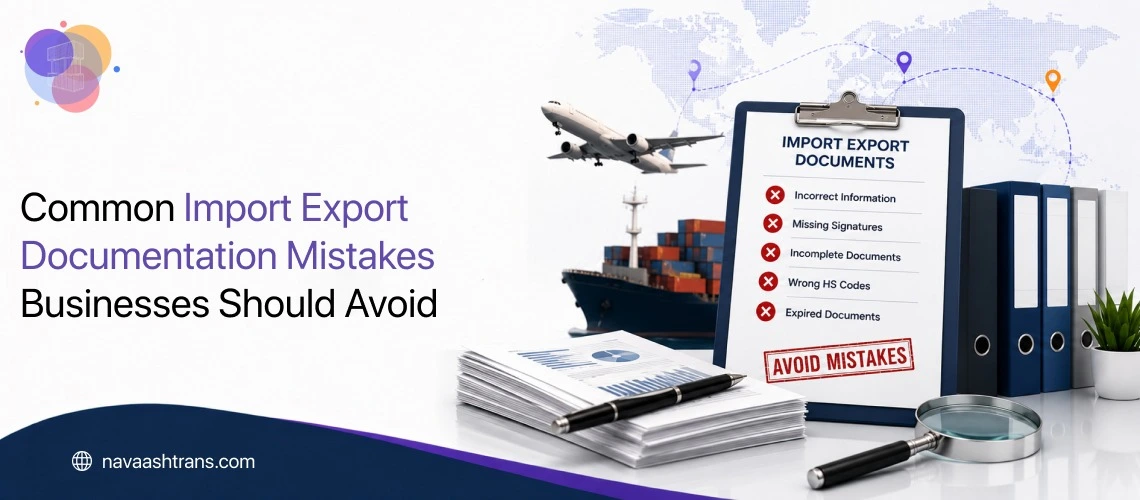
In global trade, documentation is just as important as the cargo itself. Even a small paperwork mistake can create major problems like shipment delays, customs penalties, extra charges, or even cargo rejection. Many businesses focus heavily on transportation and product quality but overlook the importance of accurate documentation. That is where most import export documentation mistakes happen.
Whether you are a manufacturer, exporter, importer, freight forwarder, or supply chain company, understanding documentation requirements is critical for smooth international shipping. Proper documentation not only helps with customs clearance but also improves shipping efficiency, compliance, and customer trust.
In this blog, we will discuss the most common import export documentation mistakes businesses should avoid, how these errors impact operations, and how professional logistics partners like Navaashtrans help businesses manage documentation smoothly.
Why Documentation Is Important in Import Export Business
Every international shipment requires multiple documents for customs authorities, shipping lines, ports, and buyers. These documents verify cargo details, product value, origin, quantity, taxation, and shipping terms.
Errors in import export paperwork can lead to:
- Cargo clearance delays
- Customs inspections
- Financial penalties
- Shipment holds
- Increased logistics costs
- Loss of customer trust
- Compliance issues
A proper export documentation process ensures that shipments move smoothly from origin to destination without unnecessary complications.
Most Common Import Export Documentation Mistakes
Incorrect Commercial Invoice Details
One of the most common import export documentation mistakes is incorrect information on the commercial invoice. Customs authorities rely heavily on this document to determine duties, taxes, and cargo value.
Common Commercial Invoice Mistakes
- Wrong product description
- Incorrect HS code
- Mismatch in quantity
- Incorrect consignee details
- Wrong currency or invoice value
- Missing Incoterms
For example, if a company exports industrial machinery but uses a vague description like “equipment parts,” customs may stop the shipment for verification.
To avoid commercial invoice mistakes, businesses should always double-check invoice data before shipment dispatch.
Errors in Bill of Lading
The Bill of Lading (BOL) is one of the most important international shipping documents. It acts as a shipment receipt, transport contract, and ownership document.
Common Bill of Lading Errors
- Wrong container number
- Incorrect port details
- Spelling mistakes in consignee name
- Incorrect cargo weight
- Missing shipment instructions
Bill of lading errors are among the most damaging import export documentation mistakes because they can prevent cargo from being released at the destination port.
For example, if the consignee name on the Bill of Lading does not match banking or customs records, the shipment may remain stuck at the port until corrections are made.
Packing List Errors
Many businesses underestimate the importance of packing lists. However, customs officials use packing lists to inspect cargo and verify shipment details.
Common Packing List Errors
- Incorrect carton quantity
- Weight mismatch
- Missing dimensions
- Wrong product specifications
- Improper package markings
Packing list errors often lead to physical inspections, which increase cargo clearance delays and storage charges.
Accurate logistics documentation helps avoid unnecessary inspections and ensures faster cargo movement.
For example, Imagine shipping 240 cartons but your packing list shows 220. When customs physically inspects the cargo and finds the discrepancy, they will flag the shipment immediately. This triggers a full inspection, which adds days to your clearance timeline and can result in penalties for inaccurate declaration.
Incorrect HS Code Classification
HS codes are internationally standardized product classification codes used for customs duties and compliance.
Using the wrong HS code can result in:
- Higher duties
- Customs penalties
- Shipment seizures
- Import export compliance violations
For example, a textile exporter using the wrong HS code may pay incorrect duties or face shipment rejection.
Businesses should work with experienced freight forwarding services providers to ensure proper product classification.
Mistake: Using an incorrect or outdated HS code
This is one of the most impactful import export documentation mistakes. An incorrect HS code can mean you are applying the wrong duty rate. In some cases, the correct code might attract a lower rate of duty. In other cases, the wrong code might classify your goods as restricted or prohibited, which creates a compliance nightmare.
Many businesses use codes from years ago without checking if they still apply. Always verify your HS codes for each shipment, especially if the product has changed.
Missing or Incomplete Customs Documentation
Customs documentation requirements vary depending on the country, product type, and trade regulations.
Common Customs Documentation Mistakes
- Missing certificates
- Incorrect declaration forms
- Expired licenses
- Incomplete import permits
- Missing country of origin certificates
Incomplete customs documentation is one of the leading causes of customs clearance mistakes worldwide.
Professional custom clearance services can help businesses maintain proper compliance and avoid penalties.
Mistake: Certificates that do not match the invoice details
If your Certificate of Origin shows a different product description or weight than your commercial invoice, customs will flag it for verification. Every document in your shipment package must tell the same story.
Failure to Follow Country-Specific Regulations
Each country has its own import and export restrictions. Businesses often assume documentation rules are the same everywhere, which creates compliance issues.
For example:
- Food products may require health certificates
- Electronics may need safety compliance approvals
- Chemicals may require hazardous cargo declarations
Ignoring country-specific requirements can lead to shipment rejection and legal complications.
Strong import export compliance practices are essential for international trade success.
Last-Minute Documentation Preparation
Many exporters prepare shipping documents at the last moment. This increases the chances of mistakes and missing paperwork.
Rushed documentation often causes:
- Shipping documentation errors
- Delayed vessel bookings
- Missed customs deadlines
- Cargo rollover charges
An organized export documentation process allows businesses to review and verify documents before shipment dispatch.
Not Maintaining Proper Digital Records
Many businesses still rely on manual paperwork management. This increases the risk of lost documents and data entry mistakes.
Modern logistics operations require:
- Digital document storage
- Shipment tracking
- Automated verification
- Centralized logistics documentation systems
Professional 3PL logistics services providers help businesses manage documentation digitally for better accuracy and efficiency.
Ignoring Shipping Compliance Requirements
Shipping compliance includes following international trade laws, sanctions, packaging rules, and documentation standards.
Failure to follow shipping compliance can lead to:
- Heavy fines
- Shipment detention
- Business reputation damage
- Trade restrictions
Businesses involved in regular imports and exports should stay updated with changing trade regulations.
Poor Coordination Between Logistics Partners
Import export operations usually involve multiple stakeholders such as:
- Exporters
- Importers
- Freight forwarders
- Customs brokers
- Transport companies
- Warehouse providers
Poor communication between these parties often creates freight forwarding documentation issues and shipment delays.
Choosing experienced transportation services and warehouse services providers improves coordination and reduces documentation risks.
How Documentation Mistakes Impact Businesses
Financial Losses
Documentation errors can increase logistics costs through:
- Demurrage charges
- Detention charges
- Customs penalties
- Re-export costs
- Storage fees
Even one small paperwork mistake can cost businesses thousands of rupees.
Shipment Delays
Incorrect import export paperwork slows down customs clearance and affects delivery timelines.
This becomes especially problematic for:
- Perishable cargo
- Seasonal products
- Time-sensitive shipments
Cargo clearance delays also affect customer satisfaction and supply chain planning.
Loss of Customer Trust
International buyers expect smooth delivery and professional operations. Repeated shipping documentation errors can damage long-term business relationships.
Reliable documentation management builds trust and improves customer confidence.
One documentation mistake can delay your entire shipment, don’t let it impact your business.
Partner with Navaashtrans for accurate import-export documentation and seamless international logistics services.
Best Practices to Avoid Import Export Documentation Mistakes
Create a Documentation Checklist
Businesses should maintain a standard checklist for every shipment.
The checklist should include:
- Commercial invoice
- Packing list
- Bill of Lading
- Shipping instructions
- Certificate of origin
- Insurance documents
- Customs declarations
A proper checklist reduces the chances of missing documents.
Verify Documents Before Shipment
Always cross-check details such as:
- Product description
- Quantity
- Weight
- Consignee name
- HS code
- Port information
Document verification is one of the easiest ways to reduce customs clearance mistakes.
Use Professional Freight Forwarding Services
Experienced freight forwarding services providers understand global shipping regulations and documentation standards.
They help businesses with:
- Customs documentation
- Export paperwork
- Cargo coordination
- Shipping compliance
- Customs clearance support
This reduces operational risks significantly.
Train Staff Regularly
Documentation rules and trade regulations change frequently. Regular employee training improves awareness and reduces human errors.
Training should cover:
- Customs updates
- Compliance procedures
- Documentation formats
- Country-specific regulations
Implement Digital Documentation Systems
Automation helps reduce manual errors and improves document tracking.
Digital systems help businesses:
- Store records securely
- Access documents quickly
- Track shipments efficiently
- Reduce paperwork duplication
Modern logistics companies increasingly use digital solutions for better documentation accuracy.
Why Choose Navaashtrans for Import Export Documentation Support
When handling international trade shipments, choosing the right logistics partner makes a major difference. Navaashtrans helps businesses avoid common import export documentation mistakes through professional logistics support and industry expertise.
Experienced Documentation Team
Navaashtrans has experienced professionals who understand complex customs documentation requirements and international shipping procedures.
End-to-End Logistics Solutions
The company offers complete support including:
-
- Freight forwarding services
- Custom clearance services
- Transportation services
- Warehouse services
- Cargo handling support
- Shipment coordination
Strong Compliance Support
Navaashtrans focuses heavily on import export compliance and shipping compliance to help businesses avoid penalties and delays.
Faster Cargo Clearance
With proper documentation verification and customs coordination, Navaashtrans helps reduce cargo clearance delays and improves shipment efficiency.
Reliable 3PL Logistics Services
Businesses looking for dependable 3PL logistics services can benefit from integrated supply chain support and streamlined documentation management.
Conclusion
In international trade, accurate documentation is essential for smooth logistics operations. From commercial invoice mistakes to bill of lading errors and customs documentation issues, even minor mistakes can result in serious shipment delays and financial losses.
Businesses must focus on proper import export paperwork, compliance management, and document verification to avoid unnecessary complications. Working with experienced logistics partners also helps improve shipping efficiency and reduce operational risks.
A well-managed export documentation process not only supports faster customs clearance but also strengthens customer trust and long-term business growth.
For reliable freight forwarding services, custom clearance services, warehouse services, transportation services, and professional logistics support, Navaashtrans helps businesses simplify global shipping operations with accuracy and efficiency.
FAQ
1. What are the most common import export documentation mistakes?
Incorrect invoices, packing list errors, and missing customs documents are the most common mistakes.
2. How do shipping documentation errors affect cargo delivery?
They can cause customs delays, penalties, shipment holds, and additional logistics costs.
3. Why is accurate customs documentation important?
Proper customs documentation ensures smooth cargo clearance and compliance with international trade regulations.
4. How can businesses avoid cargo clearance delays?
By verifying all shipping documents carefully and working with experienced logistics partners like Navaashtrans.
5. What services does Navaashtrans provide for import-export businesses?
Navaashtrans offers freight forwarding, custom clearance, warehouse, transportation, and 3PL logistics services.