Have you ever returned a product you bought online and wondered what happens to it after it leaves your doorstep? That journey back through the supply chain is what we call reverse logistics, and it is far more complex, and far more valuable, than most businesses realize.
In today’s competitive business environment, delivering products to customers is only one part of the supply chain. What happens when products are returned, damaged, recycled, repaired, or need disposal? This is where Reverse Logistics becomes an essential business function.
As eCommerce, manufacturing, retail, and industrial sectors continue to grow, businesses are handling increasing volumes of returns and product recovery activities. Companies that effectively manage returns not only reduce costs but also improve customer satisfaction and sustainability efforts.
In this guide, we’ll explain What is Reverse Logistics, how the Reverse Logistics Process works, its key benefits, and why it has become a critical component of modern supply chain management.
What Is Reverse Logistics?
Reverse Logistics refers to the movement of goods from the end customer back to the manufacturer, supplier, distributor, or warehouse for returns, repairs, refurbishment, recycling, replacement, or disposal.
Unlike traditional logistics, where products move from manufacturers to customers, Reverse Logistics focuses on the reverse flow of goods.
Simply put, when a product travels backward through the supply chain after delivery, it becomes part of the Reverse Logistics process.
Common Examples of Reverse Logistics
- Customer product returns
- Damaged goods recovery
- Product recalls
- Warranty returns
- Equipment refurbishment
- Recycling and waste management
- Reusable packaging returns
- Unsold inventory returns
For example, if a buyer buys a laptop online and receives a damaged unit, the process of returning the laptop to the seller and replacing or fixing it is considered reverse logistics.
Reverse Logistics in Supply Chain Management
Many businesses view logistics only as transportation and delivery. However, reverse logistics in supply chain management is equally important because returned products impact inventory, warehouse operations, transportation costs, and customer experience.
A strong reverse logistics strategy helps companies:
- Recover product value
- Reduce operational losses
- Improve inventory accuracy
- Enhance customer trust
- Support sustainability initiatives
Today, successful supply chains are designed to manage both forward and reverse product flows efficiently.
Why Reverse Logistics Is Becoming More Important
The rise of online shopping has dramatically increased product return rates.
According to industry reports, return rates in eCommerce can be significantly higher than traditional retail stores. Businesses that fail to manage returns effectively often experience:
- Higher logistics costs
- Inventory disruptions
- Customer dissatisfaction
- Reduced profitability
This growing challenge highlights the importance of reverse logistics across industries.
Reverse Logistics Process: Step-by-Step
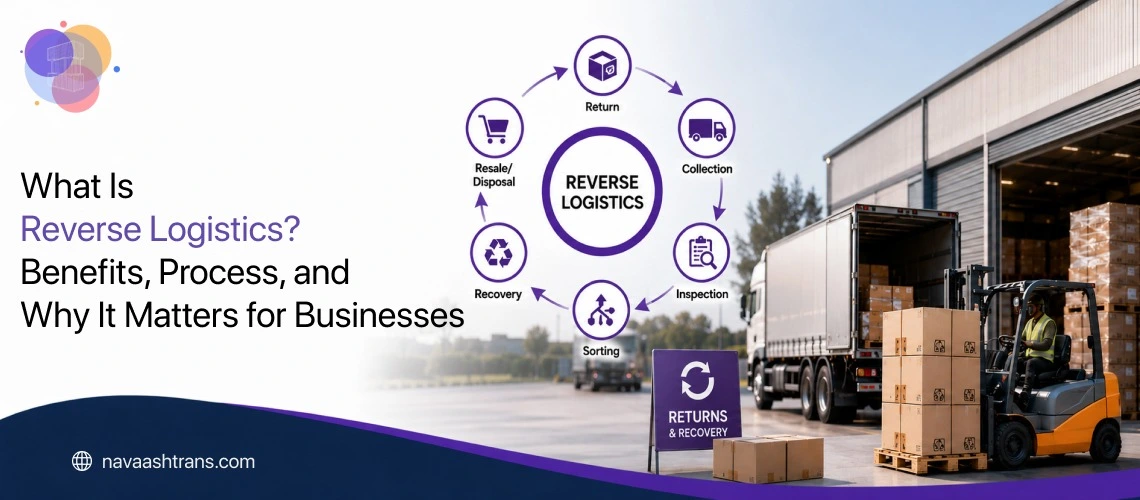
Understanding the Reverse Logistics Process helps businesses create an efficient system for handling returns and product recovery.
Step 1: Return Request Initiation
The process begins when a customer requests a return, replacement, repair, or exchange.
Common reasons include:
- Damaged products
- Wrong items delivered
- Product defects
- Customer dissatisfaction
- Warranty claims
A smooth return request process improves customer experience.
Step 2: Product Collection and Transportation
The returned item is collected from the customer or delivered to a designated return center. At this stage, transportation planning becomes important to minimize reverse shipping costs. Businesses often partner with experienced logistics providers to streamline collection activities.
This is where efficient transportation services play a huge role. Poor coordination at this stage leads to delays, additional costs, and damaged goods.
Step 3: Inspection and Evaluation
When products arrive at the return processing center or warehouse, they go through inspection. Each item is assessed for its condition, is it sellable as new? Can it be refurbished? Does it need to be recycled or disposed of? This step determines the next path for each product.
The company determines whether the product should be:
- Repaired
- Refurbished
- Resold
- Recycled
- Disposed of
Proper inspection prevents unnecessary losses and ensures accurate decision-making.
Step 4: Processing and Recovery
After evaluation, the product enters the appropriate recovery channel.
Examples include:
Repair
Minor defects are fixed and the product is returned to customers.
Refurbishment
Products are restored and resold at discounted prices.
Recycling
Materials such as metal, plastic, and electronic components are recovered.
Disposal
Products with no recovery value are disposed of responsibly.
Step 5: Inventory Update
The final step involves updating inventory systems and financial records. Tracking return reasons, volumes, product conditions, and processing outcomes gives businesses the intelligence they need to reduce returns, improve product quality, and optimize the entire reverse logistics management system.
This ensures:
- Accurate stock levels
- Better forecasting
- Improved inventory management
An efficient Reverse Logistics Process minimizes disruptions and improves operational visibility.
Benefits of Reverse Logistics
Businesses often view returns as a cost center. However, a well-managed Reverse Logistics strategy can generate significant business value.
Let’s explore the major Benefits of Reverse Logistics.
1. Improves Customer Satisfaction
Modern customers expect hassle-free returns.
A smooth return experience increases customer trust and encourages repeat purchases.
Companies that provide easy returns often enjoy stronger customer loyalty compared to competitors. Reverse logistics directly supports this.
2. Reduces Operational Costs
Effective Reverse Logistics helps businesses:
- Lower transportation expenses
- Reduce inventory carrying costs
- Recover product value
This directly improves profitability.
Not every returned product is damaged beyond use. Many can be resold as “open box” or refurbished at a lower price. This helps businesses recover a significant portion of the product’s original value instead of writing it off entirely.
3. Enhances Inventory Management
Returned products affect inventory accuracy.
A structured Reverse Logistics system ensures:
- Better stock visibility
- Faster inventory reconciliation
- Improved demand forecasting
This helps businesses avoid stock shortages and overstock situations.
Reverse logistics helps businesses reclaim inventory that would otherwise be written off. By reintegrating saleable returns back into inventory, companies can reduce procurement costs and avoid overstocking.
4. Supports Sustainability Goals
Sustainability is becoming a major priority worldwide.
Reverse Logistics promotes:
- Recycling
- Product reuse
- Waste reduction
- Circular economy practices
Businesses that adopt environmentally responsible logistics processes often improve brand reputation. For companies with ESG goals or those operating in regulated industries, this is not just good practice, it is a legal requirement.
5. Increases Revenue Recovery
Many returned products still have value.
Companies can recover revenue through:
- Refurbishment
- Resale
- Spare parts recovery
- Material recycling
Instead of treating returns as losses, businesses can turn them into revenue opportunities.
6. Strengthens Brand Reputation
Customers remember how companies handle problems.
A transparent and efficient return process demonstrates professionalism and reliability.
This positively impacts customer reviews and brand perception.
Ready to take control of your reverse logistics operations?
Contact Navaashtrans today and let our team design a returns management solution that works for your business.
Reverse Logistics Management: Key Challenges
Although Reverse Logistics offers many advantages, managing it effectively can be challenging.
High Transportation Costs
Reverse shipments often involve smaller quantities, increasing transportation costs per unit.
Lack of Visibility
Many businesses struggle to track returned products across multiple locations. Without proper visibility, delays and inventory errors become common.
Complex Return Handling
Different products require different return procedures. It is difficult to manage inspections, repairs, recycling, and disposal all at the same time.
Warehouse Congestion
Large volumes of returned inventory can consume warehouse space and slow operations.
This is why many companies rely on specialized Warehousing Services to manage reverse inventory efficiently.
Regulatory complexity
For companies involved in cross-border trade, reverse logistics must also navigate customs regulations. This is where working with a partner that offers custom clearance services becomes essential to avoiding costly delays or compliance issues.
Reverse Logistics in India: Growing Opportunities
The Indian logistics sector is going through a transformation. Reverse logistics in India is increasingly being recognized as a strategic function rather than an afterthought.
The demand for Reverse Logistics in India is growing rapidly due to:
- Expansion of eCommerce
- Rising customer expectations
- Government sustainability initiatives
- Increasing product return volumes
Industries actively investing in Reverse Logistics include:
- Retail
- Electronics
- Automotive
- Pharmaceuticals
- Consumer goods
- Manufacturing
As India’s logistics sector evolves, businesses are increasingly partnering with experienced logistics providers to build efficient return management systems.
Returns Management in Logistics: Why It Matters
Returns Management in Logistics is a critical component of customer service and supply chain performance.
An effective returns management strategy helps businesses:
- Reduce return processing time
- Improve customer retention
- Recover product value faster
- Reduce operational disruptions
For example, a consumer electronics company that handles returns in days rather than weeks can greatly increase customer satisfaction and save inventory losses.
How Technology Is Shaping Reverse Logistics
Modern reverse logistics relies heavily on technology to drive efficiency. Barcode scanning, RFID tracking, warehouse management systems, and AI-based sorting tools are all being used to streamline the returns process. Some companies are also using predictive analytics to identify high-risk orders, those likely to be returned, so they can proactively manage inventory and reduce reverse logistics costs before they happen.
For businesses using ICD cargo services or managing cross-border shipments, digital platforms are also helping coordinate the documentation and compliance requirements that come with international returns.
Role of a Reverse Logistics Company
A professional reverse logistics company helps businesses manage the entire return lifecycle.
Services typically include:
- Return pickup coordination
- Transportation management
- Product inspection
- Refurbishment support
- Recycling solutions
- Inventory tracking
- Reporting and analytics
Outsourcing Reverse Logistics allows businesses to focus on core operations while improving return efficiency.
Why Choose Navaashtrans for Logistics Solutions?
At Navaashtrans, we understand that modern supply chains require more than just transportation. Businesses need reliable logistics partners capable of managing both forward and reverse product movements efficiently.
With deep expertise across the entire logistics ecosystem, we offer end-to-end reverse logistics solutions tailored to your business.
What Makes Navaashtrans Different?
Industry Experience
Our team has extensive experience handling diverse logistics requirements across industries.
End-to-End Logistics Support
We offer integrated logistics solutions including:
- 3PL Services in India
- Freight Forwarding Services
- Custom Clearance Services
- Warehousing Services
- Transportation Services
- ICD Cargo Services
- Project Cargo Logistics Services
Customer-Focused Approach
We prioritize transparency, communication, and operational efficiency to help businesses reduce costs and improve supply chain performance.
3PL Capabilities
As a trusted provider of 3PL services in India, we offer scalable returns management solutions that grow with your business, whether you are processing 100 returns a month or 10,000.
Specialized Cargo Handling
For businesses in heavy industries or infrastructure, our project cargo logistics services extend to managing the return and redistribution of large or high-value equipment.
Nationwide Network
Our logistics network enables smooth cargo movement and efficient supply chain management across India.
Whether you’re managing product returns, inventory movement, imports, exports, or project cargo, Navaashtrans provides reliable logistics solutions tailored to your business needs.
Best Practices for Effective Reverse Logistics
Businesses looking to improve Reverse Logistics should consider the following strategies:
Automate Return Processes
Digital return systems improve speed and visibility.
Analyze Return Data
Identify common return reasons and reduce recurring issues.
Improve Product Quality
Reducing defects naturally lowers return volumes.
Partner with Experienced Logistics Providers
Professional logistics partners help streamline returns and reduce operational complexity.
Create Clear Return Policies
Customers should easily understand return procedures and timelines.
Conclusion
Reverse Logistics is no longer an optional business process. It has become a critical part of modern supply chain management, helping businesses reduce costs, recover product value, improve customer satisfaction, and support sustainability goals.
A well-designed Reverse Logistics Process ensures that returned products are handled efficiently, whether through repair, refurbishment, recycling, or disposal. As return volumes continue to grow, businesses that invest in strong Reverse Logistics Management systems will gain a significant competitive advantage.
Whether you’re an eCommerce seller, manufacturer, retailer, or industrial business, understanding the importance of reverse logistics can help improve operational efficiency and long-term profitability.
FAQs
1. What is Reverse Logistics?
Reverse Logistics is the process of moving products from customers back to manufacturers, warehouses, or sellers for returns, repairs, recycling, or disposal.
2. What are the main steps in the Reverse Logistics Process?
The process includes product return, collection, inspection, recovery, refurbishment/recycling, and inventory updates.
3. How does Reverse Logistics benefit the supply chain?
Reverse logistics in supply chain management improves inventory control, reduces waste, and increases operational efficiency.
4. Can businesses outsource Reverse Logistics Management?
Yes, businesses can partner with a reverse logistics company like Navaashtrans to manage returns, transportation, warehousing, and product recovery efficiently.
5. How can Navaashtrans help with reverse logistics?
Navaashtrans offers end-to-end reverse logistics solutions including 3PL services, warehousing, transportation, and customs clearance to manage returns efficiently across India.
“Need help with export logistics or freight forwarding? Connect with the team at Navaashtrans for customized logistics support across India.”